PCOS Specialist in Orange County — Diagnosis, Treatment & Long-Term Management | Broad Medical Group (949) 720-9848
PCOS Specialist · Orange County · 2026

PCOS Treatment
Diagnosis & Long-Term Management

More than a diagnosis — a comprehensive plan.

Polycystic ovary syndrome is the most common endocrine disorder in reproductive-age women, yet it remains widely misunderstood and frequently underdiagnosed. This guide covers the diagnostic criteria, symptom management, fertility implications, metabolic risks, and the evidence-based treatment approach Dr. Jennifer Broad provides at Broad Medical Group in Orange County.

◆ Short Answer

The Canonical Answer

Polycystic ovary syndrome (PCOS) is a metabolic and hormonal disorder affecting 6–12% of reproductive-age women CDC. Despite its name, the condition is not simply about ovarian cysts — it is a syndrome involving hormonal imbalance, insulin resistance, and chronic low-grade inflammation. Diagnosis follows the Rotterdam criteria: two of three features must be present — oligo/anovulation, hyperandrogenism, and polycystic ovarian morphology Rotterdam 2004. There is no cure, but symptoms are effectively managed through lifestyle modification, hormonal therapy, and metabolic treatment. PCOS is the leading cause of anovulatory infertility, and letrozole is the current first-line ovulation induction agent Legro 2013. Long-term metabolic risks include type 2 diabetes (up to 50% of women with PCOS by age 40), cardiovascular disease, and endometrial hyperplasia ACOG PB #194. At Broad Medical Group, Dr. Jennifer Broad provides comprehensive PCOS evaluation and individualized treatment for women in Newport Beach and Orange County.

Dr. Jennifer Broad headshot
Medically reviewed by Dr. Jennifer Broad, MD, FACOG Board-Certified Obstetrician-Gynecologist · Newport Beach, CA
Last reviewed: April 2026 Next review: October 2026
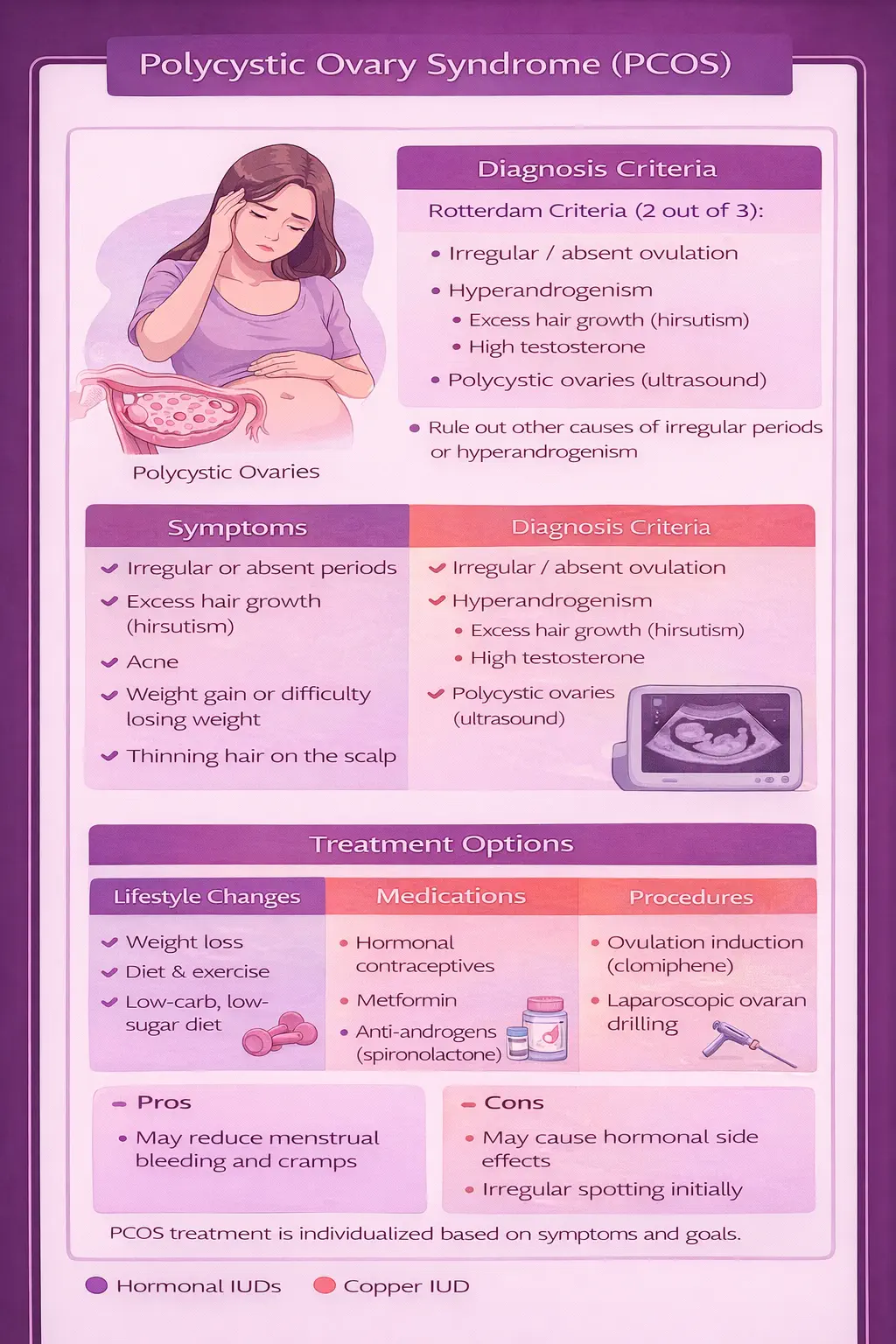
Polycystic ovary syndrome overview - diagnosis, symptoms, and treatment pathways

What Is PCOS?

The Name Is Misleading

“Polycystic ovary syndrome” is one of the most misleading names in medicine. The condition is not primarily about cysts on the ovaries. Many women with PCOS do not have ovarian cysts, and many women with ovarian cysts do not have PCOS. The name has persisted since the 1930s, but the international medical community has acknowledged that it fails to capture what PCOS actually is — a complex metabolic, hormonal, and reproductive syndrome.

Polycystic ovary syndrome (PCOS) is the most common endocrine disorder in reproductive-age women, affecting approximately 6–12% of women in the United States according to the CDC, though prevalence estimates vary from 8% to 13% globally depending on diagnostic criteria used. Some studies using the broadest Rotterdam criteria estimate prevalence as high as 15–20%.

PCOS is fundamentally a syndrome — a collection of related signs and symptoms rather than a single disease entity. The core features involve:

  • Hormonal dysregulation — elevated androgens (male hormones such as testosterone and DHEA-S), which produce symptoms like acne, excess hair growth, and hair thinning.
  • Ovulatory dysfunction — irregular, infrequent, or absent menstrual periods due to failure to ovulate regularly.
  • Metabolic disruption — insulin resistance is present in up to 70–80% of women with PCOS, driving both the hormonal imbalance and the long-term metabolic risks associated with the condition.
  • Chronic low-grade inflammation — increasingly recognized as a contributor to both the metabolic and reproductive features of PCOS.

The “polycystic” appearance on ultrasound refers to multiple small antral follicles (immature eggs) that have been recruited but not ovulated. These are not pathological cysts in the traditional sense — they are follicles that have stalled in development due to hormonal imbalance. Their presence is one of three diagnostic criteria, but it is neither required for diagnosis nor sufficient on its own.

PCOS is now understood to have a strong genetic component. First-degree relatives of women with PCOS have a significantly higher risk of developing the condition. Environmental factors — including diet, physical activity level, and exposure to endocrine disruptors — likely interact with genetic predisposition to determine whether and how severely the syndrome manifests.

Rotterdam Diagnostic Criteria

Rotterdam 2004 ACOG PB #194 Endocrine Society 2023

The Rotterdam criteria, established in 2003 and widely adopted since 2004, remain the international standard for diagnosing PCOS. A diagnosis requires the presence of at least two of three cardinal features, after exclusion of other conditions that could account for the findings.

Criterion What It Means How It’s Assessed
1. Oligo-ovulation or Anovulation Irregular, infrequent, or absent menstrual cycles due to failure to ovulate regularly Menstrual history: cycles >35 days, <8 cycles/year, or amenorrhea ≥3 months
2. Hyperandrogenism Elevated male hormones — either clinical signs or laboratory evidence Clinical: acne, hirsutism (Ferriman-Gallwey score), alopecia. Labs: total/free testosterone, DHEA-S
3. Polycystic Ovarian Morphology ≥12 follicles (2–9 mm) per ovary or ovarian volume >10 mL on ultrasound Transvaginal ultrasound (updated threshold: ≥20 follicles per ovary with newer technology)
Clinical Guideline

The Rotterdam criteria require 2 of 3 features for diagnosis. Importantly, a woman can be diagnosed with PCOS without having polycystic ovaries on ultrasound — if she has both anovulation and hyperandrogenism, that is sufficient. Conversely, a woman with polycystic-appearing ovaries on ultrasound but regular cycles and normal androgen levels does not meet criteria for PCOS.

Before confirming a PCOS diagnosis, Dr. Broad performs a thorough workup to exclude conditions that can mimic PCOS, including:

  • Thyroid disorders (hypothyroidism can cause irregular periods and weight gain)
  • Non-classic congenital adrenal hyperplasia (elevated 17-hydroxyprogesterone)
  • Hyperprolactinemia (elevated prolactin from pituitary causes)
  • Cushing syndrome (cortisol excess)
  • Androgen-secreting tumors (rare, but considered with very high androgen levels)
  • Hypothalamic amenorrhea (from stress, underweight, or excessive exercise)

The diagnostic workup typically includes blood tests for TSH, prolactin, 17-hydroxyprogesterone, total and free testosterone, DHEA-S, FSH, LH, fasting insulin, fasting glucose, hemoglobin A1c, and a lipid panel. A transvaginal ultrasound is performed to evaluate ovarian morphology and exclude other pelvic pathology.

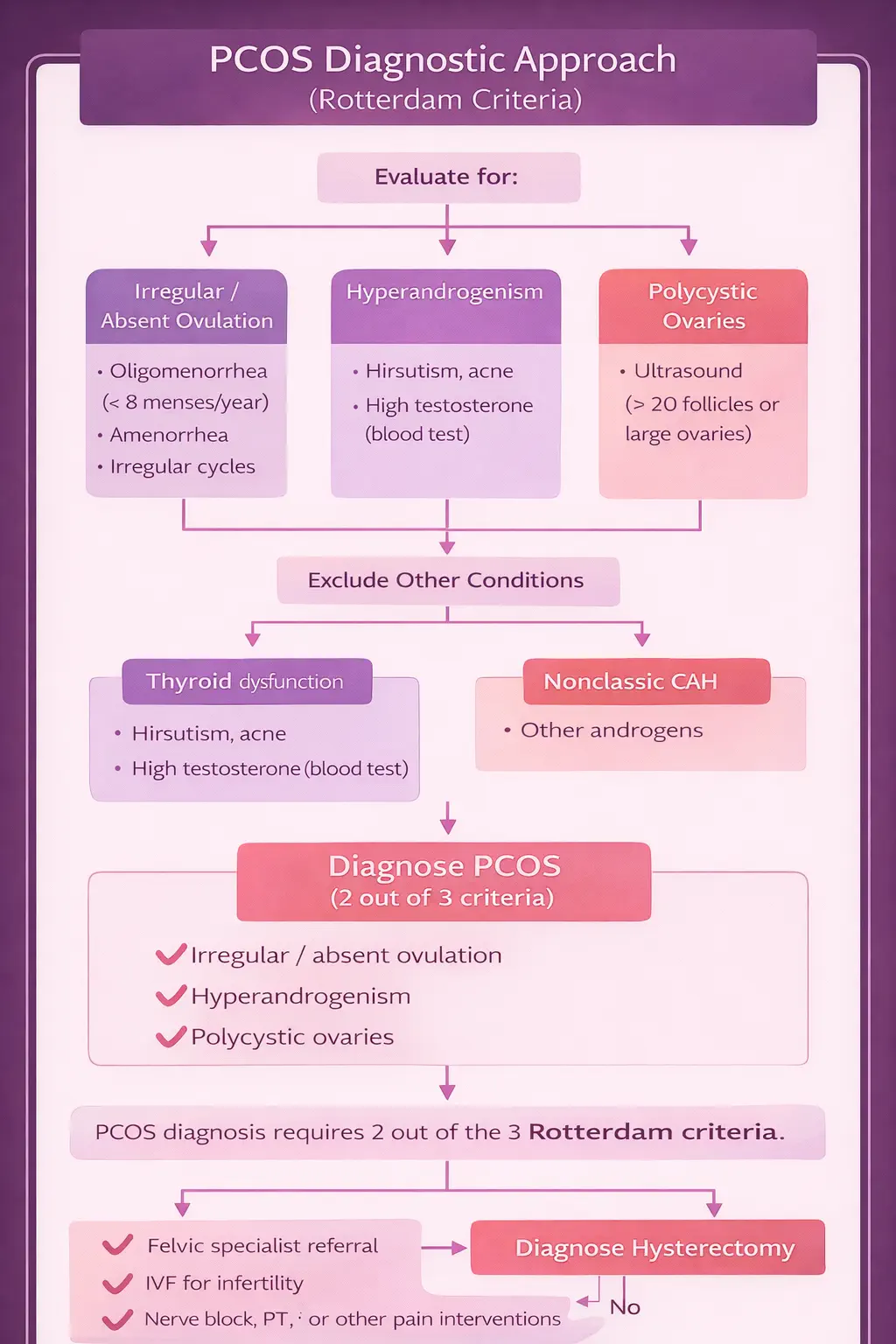
PCOS diagnostic criteria flowchart - Rotterdam 2-of-3 criteria with exclusion of other causes leading to confirmed diagnosis
Rotterdam diagnostic criteria for PCOS. Two of three features are required, after exclusion of other causes. Based on Rotterdam 2004 and Endocrine Society 2023 guidelines.

Recognizing PCOS Symptoms

PCOS presents differently in every woman. Some patients present primarily with menstrual irregularity, others with cosmetic concerns like acne and hirsutism, and some discover they have PCOS only when they have difficulty conceiving. Symptoms may first appear around the time of puberty, or they may develop or worsen later in life — particularly with weight gain.

Irregular Periods
Cycles longer than 35 days, fewer than 8 periods per year, or absent periods entirely. This is the most common presenting symptom and reflects underlying ovulatory dysfunction.
Excess Hair Growth (Hirsutism)
Coarse, dark hair on the face (upper lip, chin, jawline), chest, abdomen, and back. Affects approximately 70% of women with PCOS and results from elevated androgen levels.
Acne & Skin Changes
Persistent hormonal acne (often along the jawline and chin), oily skin, and acanthosis nigricans — dark, velvety patches in skin folds (neck, underarms, groin) that signal insulin resistance.

Additional symptoms frequently associated with PCOS include:

  • Weight gain or difficulty losing weight — particularly central (abdominal) weight gain, driven by insulin resistance. However, approximately 20–30% of women with PCOS are normal weight or lean.
  • Hair thinning or female-pattern hair loss — androgenic alopecia, typically presenting as diffuse thinning across the crown of the scalp rather than a receding hairline.
  • Difficulty conceiving — due to irregular or absent ovulation. PCOS is the most common cause of anovulatory infertility.
  • Mood changes — depression and anxiety are significantly more prevalent in women with PCOS, independent of BMI. The relationship is likely multifactorial, involving hormonal, metabolic, and psychosocial factors.
  • Fatigue and sleep disturbances — obstructive sleep apnea is more common in women with PCOS, even in those who are not overweight.
  • Acanthosis nigricans — dark, thickened skin in body folds, a visible marker of underlying insulin resistance.
Important Note

PCOS is a lifelong condition. Symptoms may fluctuate over time — improving with treatment or worsening with weight gain — but the underlying hormonal and metabolic predisposition does not resolve. Women with PCOS require ongoing monitoring even when symptoms are well-controlled, particularly for metabolic complications such as insulin resistance, prediabetes, and cardiovascular risk factors.

PCOS and Fertility

PCOS is the leading cause of anovulatory infertility, accounting for approximately 70–80% of cases. However, having PCOS does not mean you cannot get pregnant. With appropriate treatment, the majority of women with PCOS are able to conceive.

The fundamental issue is ovulatory dysfunction. In PCOS, hormonal imbalances — particularly elevated LH and androgens along with insulin resistance — disrupt the normal follicular development process. Follicles are recruited but fail to mature to the point of ovulation. Without ovulation, conception cannot occur naturally.

The treatment approach for PCOS-related infertility is stepwise, beginning with the least invasive interventions and escalating as needed:

Step 1: Lifestyle Modification

For women with PCOS who are overweight, lifestyle modification is always the first step. Even modest weight loss of 5–10% of body weight can restore ovulatory cycles in a significant proportion of women. This is because weight loss improves insulin sensitivity, which in turn reduces androgen levels and allows normal follicular development to resume.

Step 2: Ovulation Induction — Letrozole (First-Line)

When lifestyle modification alone is insufficient, letrozole (Femara) is the current first-line medication for ovulation induction in PCOS per the American Society for Reproductive Medicine (ASRM) and the 2023 international evidence-based guidelines. The landmark NICHD trial by Legro et al. (2014) demonstrated that letrozole resulted in significantly higher ovulation rates, pregnancy rates, and live birth rates compared to clomiphene citrate in women with PCOS.

Step 3: Clomiphene Citrate

Clomiphene citrate (Clomid) was previously the first-line agent and remains widely used. It is an effective alternative when letrozole is contraindicated, unavailable, or when patient preference dictates. Clomiphene induces ovulation in approximately 75–80% of women with PCOS, though cumulative pregnancy rates are lower than with letrozole.

Step 4: Gonadotropins

For women who do not ovulate with oral medications, injectable gonadotropins (FSH) can be used to stimulate follicular development. This requires close monitoring with serial ultrasounds and blood work due to the risk of ovarian hyperstimulation syndrome (OHSS) and multiple pregnancy. A low-dose, step-up protocol is recommended in PCOS to minimize these risks.

Step 5: In Vitro Fertilization (IVF)

IVF is considered when ovulation induction has been unsuccessful, when there are additional infertility factors (such as tubal disease or male factor), or when the patient prefers a more direct approach. Women with PCOS tend to produce a high number of eggs during IVF stimulation, but they also have an elevated risk of OHSS, which requires careful protocol adjustment.

Ovarian Drilling (Rare)

Laparoscopic ovarian drilling — a surgical procedure that creates small punctures in the ovarian surface — can restore ovulation in some women with PCOS who have not responded to medical therapy. This is rarely performed today given the effectiveness of medical alternatives, but remains an option in specific clinical scenarios. See our minimally invasive surgery page for more on laparoscopic procedures.

Patient Tip

Weight loss of just 5–10% can restore ovulation in many women with PCOS. For a woman weighing 180 lbs, that is 9–18 lbs. This modest change improves insulin sensitivity, lowers androgen levels, and in many cases is enough to resume regular ovulatory cycles — sometimes without any additional medication. Lifestyle modification should always be the foundation, even when combined with medical treatment.

Treatment: Managing PCOS Long-Term

Because PCOS is a chronic condition with no cure, the goal of treatment is to manage symptoms, restore hormonal balance, reduce metabolic risk, and address the patient’s most pressing concerns — whether that is irregular periods, fertility, acne, hirsutism, weight management, or long-term health. Treatment is individualized and evolves over a woman’s lifetime as her goals change.

Lifestyle Modification

Lifestyle modification is the cornerstone of PCOS treatment regardless of BMI. A balanced, anti-inflammatory diet, regular physical activity (both aerobic exercise and resistance training), adequate sleep, and stress management all contribute to improved insulin sensitivity, reduced androgens, and better overall outcomes. For women who are overweight, even a 5–10% reduction in body weight has been shown to:

  • Improve or restore ovulatory cycles
  • Reduce testosterone and androgen levels
  • Lower fasting insulin and improve insulin sensitivity
  • Reduce the risk of progression to type 2 diabetes
  • Improve mood, energy, and quality of life

Combined Oral Contraceptives (OCPs)

For women who are not currently trying to conceive, combined oral contraceptives are a first-line treatment for menstrual irregularity and hyperandrogenism. OCPs work by:

  • Regulating the menstrual cycle and providing regular withdrawal bleeds
  • Suppressing ovarian androgen production
  • Increasing sex hormone-binding globulin (SHBG), which binds free testosterone
  • Protecting the endometrium from hyperplasia due to unopposed estrogen

OCPs containing an anti-androgenic progestin (such as drospirenone) may provide additional benefit for acne and hirsutism. See our birth control options page for more on hormonal contraception.

Metformin

Metformin is an insulin-sensitizing medication originally developed for type 2 diabetes. In PCOS, it targets the underlying insulin resistance that drives much of the hormonal imbalance. Metformin can improve menstrual regularity, modestly reduce androgen levels, and may facilitate weight loss. It is particularly useful in women with PCOS who have documented insulin resistance, prediabetes, or type 2 diabetes. Metformin can be used alone or in combination with OCPs.

Spironolactone

Spironolactone is an anti-androgen medication used specifically for the cosmetic symptoms of PCOS — hirsutism, acne, and androgenic alopecia. It works by blocking androgen receptors and reducing androgen production. Because spironolactone is teratogenic (can cause birth defects), it must be used with reliable contraception and is typically prescribed alongside an OCP. Full effect on hirsutism takes 6–12 months.

Inositol

Myo-inositol and D-chiro-inositol are nutritional supplements with emerging evidence supporting their use in PCOS. They act as insulin sensitizers and may improve ovulation rates, hormonal profiles, and metabolic parameters. The 2023 international evidence-based guidelines acknowledge inositol as a potential adjunctive therapy, though they note that larger, higher-quality trials are still needed. Many patients find inositol helpful as a complement to standard medical therapy, and it is generally well-tolerated.

Clinical Warning

Women with PCOS who are not on hormonal contraception and have irregular periods are at increased risk for endometrial hyperplasia and endometrial cancer. When ovulation does not occur, the uterine lining is exposed to estrogen without the protective effect of progesterone (unopposed estrogen). Over time, this can lead to abnormal thickening of the endometrium. If you have PCOS and go more than 3 months without a period while not on contraception, contact your provider for evaluation. A progestin withdrawal or endometrial assessment may be necessary.
Metabolic Risks

PCOS is not only a reproductive condition — it carries significant long-term metabolic consequences that require proactive screening and management throughout a woman’s lifetime. The metabolic features of PCOS are driven primarily by insulin resistance and chronic low-grade inflammation.

Type 2 Diabetes
Up to 50% of women with PCOS develop type 2 diabetes or prediabetes by age 40. Insulin resistance is the primary driver. Screening with fasting glucose and HbA1c should begin at diagnosis and be repeated every 1–3 years.
Cardiovascular Disease
Women with PCOS have higher rates of dyslipidemia, hypertension, and metabolic syndrome. Cardiovascular risk assessment including lipid panel and blood pressure monitoring should be part of routine PCOS follow-up.
Endometrial Hyperplasia
Chronic anovulation leads to unopposed estrogen exposure, which can cause the uterine lining to thicken abnormally. Without treatment, this may progress to endometrial cancer. Regular periods (via OCPs or progestin) are protective.

Additional health concerns associated with PCOS include:

  • Obstructive sleep apnea — significantly more common in women with PCOS, even independent of obesity. Symptoms include snoring, daytime fatigue, and morning headaches. Screening should be considered in all women with PCOS.
  • Depression and anxiety — women with PCOS have a 3–8 times higher prevalence of depression and anxiety compared to women without PCOS. Mental health screening should be a routine part of PCOS care.
  • Non-alcoholic fatty liver disease (NAFLD) — increasingly recognized as part of the metabolic profile of PCOS, driven by insulin resistance.
  • Gestational diabetes and preeclampsia — women with PCOS who become pregnant have higher rates of pregnancy complications, including gestational diabetes, preeclampsia, and preterm delivery. Close prenatal monitoring is essential.

Because of these risks, Dr. Broad recommends that women with PCOS have regular metabolic screening including fasting glucose and HbA1c, a lipid panel, blood pressure monitoring, and mental health assessment. Your annual well-woman exam provides a natural checkpoint for this ongoing surveillance.

Why See a PCOS Specialist?

PCOS is one of the most common conditions in gynecology, yet it is also one of the most frequently mismanaged. Many women report years of frustration before receiving an accurate diagnosis. Some are told they “just have irregular periods” or are placed on birth control without a proper workup. Others are diagnosed based on ultrasound findings alone, without the hormonal and metabolic evaluation needed for comprehensive care.

Not all OBGYNs focus on PCOS management in depth. A specialist approach includes:

  • Comprehensive hormonal evaluation — not just confirming the diagnosis, but characterizing which hormonal and metabolic features are most prominent in your individual presentation.
  • Full metabolic screening — insulin resistance assessment, diabetes screening, lipid panel, liver function — to quantify your long-term health risks and intervene early.
  • Exclusion of mimics — ensuring that thyroid disease, congenital adrenal hyperplasia, and other conditions are properly ruled out before labeling you with PCOS.
  • Individualized treatment — your treatment plan should reflect your specific symptoms, your reproductive goals, your metabolic profile, and your stage of life. A 22-year-old concerned about acne has different needs than a 35-year-old trying to conceive.
  • Long-term partnership — PCOS is lifelong. Your treatment needs will evolve as your life changes. Dr. Broad manages PCOS from adolescence through menopause, adjusting the plan as goals shift from cycle regulation to fertility to metabolic health.

At Broad Medical Group, Dr. Jennifer Broad takes a thorough, evidence-based approach to PCOS. Every patient receives a complete workup, a clear explanation of their diagnosis and individual risk profile, and a treatment plan designed around their goals. Whether you need a fresh evaluation, a second opinion, or ongoing management, Dr. Broad’s practice in Newport Beach serves patients throughout Orange County.

For more information on hormonal evaluation and androgen-related concerns, see our article on lowering testosterone in women.

Key Takeaways
  • PCOS affects 6–12% of reproductive-age women and is far more than “cysts on the ovaries” — it is a metabolic and hormonal syndrome with lifelong health implications (CDC).
  • Diagnosis requires 2 of 3 Rotterdam criteria — anovulation, hyperandrogenism, and polycystic ovarian morphology — after excluding other conditions.
  • PCOS is the leading cause of anovulatory infertility, but most women can conceive with treatment. Letrozole is the current first-line ovulation induction agent (ASRM / Legro 2013).
  • There is no cure — but symptoms are manageable. Lifestyle modification, OCPs, metformin, and spironolactone form the backbone of treatment, tailored to each patient’s goals.
  • Metabolic risks are significant. Up to 50% of women with PCOS develop type 2 diabetes by age 40. Regular screening for diabetes, cardiovascular risk, and endometrial health is essential.
  • A specialist makes a difference. Dr. Broad provides comprehensive hormonal and metabolic evaluation, proper exclusion of PCOS mimics, and individualized long-term management at Broad Medical Group.

References & Clinical Sources

  1. Rotterdam ESHRE/ASRM-Sponsored PCOS Consensus Workshop Group. Revised 2003 consensus on diagnostic criteria and long-term health risks related to polycystic ovary syndrome. Fertility and Sterility, 81(1), 19–25. 2004.
  2. American College of Obstetricians and Gynecologists. Practice Bulletin No. 194: Polycystic Ovary Syndrome. Obstetrics & Gynecology, 131(6), e157–e171. 2018.
  3. Legro RS, Brzyski RG, Diamond MP, et al. Letrozole versus Clomiphene for Infertility in the Polycystic Ovary Syndrome. New England Journal of Medicine, 371(2), 119–129. 2014.
  4. Teede HJ, Tay CT, Laven JJE, et al. Recommendations from the 2023 International Evidence-based Guideline for the Assessment and Management of Polycystic Ovary Syndrome. Journal of Clinical Endocrinology & Metabolism, 108(10), 2447–2469. 2023.
  5. Legro RS, Arslanian SA, Ehrmann DA, et al. Diagnosis and Treatment of Polycystic Ovary Syndrome: An Endocrine Society Clinical Practice Guideline. Journal of Clinical Endocrinology & Metabolism, 98(12), 4565–4592. 2013. Updated 2023.
  6. Centers for Disease Control and Prevention. PCOS (Polycystic Ovary Syndrome) and Diabetes. CDC.gov. Accessed 2026.

Related Resources

PCOS Is Complex. Your Care Shouldn’t Be Confusing.

Whether you are seeking a first-time diagnosis, a second opinion, fertility support, or long-term management — Dr. Broad provides comprehensive, evidence-based PCOS care for women throughout Orange County.

Schedule a PCOS Evaluation →

Broad Medical Group — Newport Beach, California

Medical Disclaimer: This content is for educational purposes only and does not constitute medical advice, diagnosis, or treatment. Consult Dr. Jennifer Broad or your healthcare provider for guidance specific to your situation. Current as of April 2026. If you are experiencing a medical emergency, call 911 immediately.