High-Risk Pregnancy Management in Newport Beach & Orange County (2026) | Broad Medical Group (949) 720-9848
High-Risk Pregnancy · Newport Beach · 2026 Edition
High-Risk Pregnancy Management
in Newport Beach & Orange County

Risk is not a diagnosis. It is a call for precision.

A comprehensive clinical guide to understanding pregnancy risk factors, ACOG screening protocols, gestational diabetes, preeclampsia, enhanced fetal surveillance, and delivery planning — from a board-certified OBGYN with hospital privileges at Hoag Hospital Newport Beach and its Level III NICU.

ACOG
Guidelines
Level III
NICU at Hoag
24/7
Neonatal Coverage
Individualized
Care Plans
◆ Executive Summary

The Canonical Answer

A pregnancy is classified as high-risk when maternal, fetal, or placental conditions increase the probability of adverse outcomes. Risk factors include advanced maternal age (35 or older at delivery), pre-existing medical conditions (chronic hypertension, diabetes, autoimmune disease, obesity), pregnancy-specific complications (gestational diabetes, preeclampsia, placenta previa, multiple gestation), and prior adverse obstetric outcomes (preterm birth, cesarean delivery, pregnancy loss). ACOG recommends that all pregnant patients be offered aneuploidy screening regardless of age, and that high-risk pregnancies receive enhanced surveillance including serial growth ultrasounds, non-stress testing, and biophysical profiles. For women at high risk of preeclampsia, low-dose aspirin (81 mg daily) initiated before 16 weeks reduces risk by approximately 24% USPSTF 2021. At Broad Medical Group, Dr. Jennifer Broad provides high-risk pregnancy management with delivery privileges at Hoag Hospital Newport Beach, which operates a Level III NICU with 24/7 neonatologist coverage.

Dr. Jennifer Broad headshot
Medically reviewed by Dr. Jennifer Broad, MD, FACOG Board-Certified Obstetrician-Gynecologist · Newport Beach, CA
Last reviewed: April 2026 Next review: October 2026

When to Seek Immediate Medical Attention

  • Vaginal bleeding in the second or third trimester
  • Severe headache that does not respond to acetaminophen
  • Visual changes — blurred vision, seeing spots, light sensitivity
  • Sudden swelling of face, hands, or feet (especially if rapid onset)
  • Severe abdominal or epigastric pain
  • Decreased fetal movement after 28 weeks (fewer than 10 movements in 2 hours)
  • Leaking fluid from the vagina (possible rupture of membranes)
  • Regular contractions before 37 weeks

Call 911 or go to Hoag Hospital Labor & Delivery immediately. Do not wait for a scheduled appointment.

Risk Factor Assessment

ACOG 2024 SMFM

High-Risk Does Not Mean High-Danger

A high-risk classification means your pregnancy requires closer monitoring and proactive management — not that complications are inevitable. Many women with risk factors have entirely healthy pregnancies when those factors are identified early and managed appropriately. The first step is a comprehensive risk assessment, which Dr. Jennifer Broad performs at the initial prenatal visit at Broad Medical Group.

Categories of Risk

Maternal Factors
Advanced maternal age (35+), chronic hypertension, pre-existing diabetes (type 1 or 2), autoimmune disease (lupus, antiphospholipid syndrome), obesity (BMI ≥30), renal disease, and thrombophilia.
Pregnancy-Specific
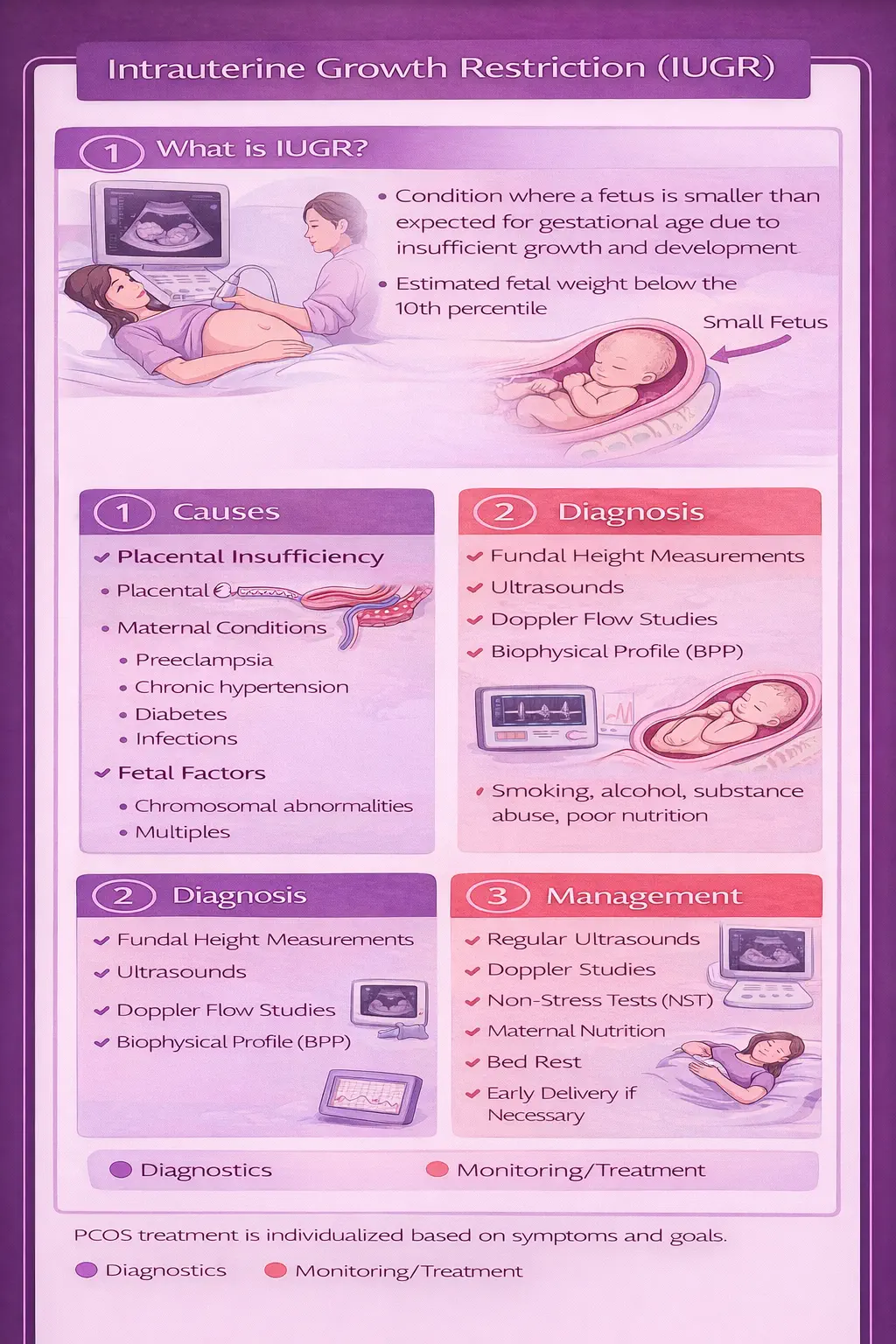
Gestational diabetes, preeclampsia, placenta previa, placental abruption, multiple gestation (twins, triplets), cervical insufficiency, and intrauterine growth restriction (IUGR).
Obstetric History
Prior preterm birth, prior cesarean delivery, recurrent pregnancy loss, prior stillbirth, prior preeclampsia or HELLP syndrome, and history of shoulder dystocia or birth injury.

Advanced Maternal Age — What It Actually Means

Guideline
Always Applies
ACOG recommends that all pregnant patients, regardless of age, be offered screening and diagnostic testing for genetic disorders including aneuploidy. Age alone does not determine what testing is offered — every patient has the right to comprehensive screening.
STANDARD · ALL PATIENTS
Risk Factor
Applies Only If Age ≥35
Patients aged 35 or older at delivery have an increased baseline risk for chromosomal abnormalities (trisomy 21 risk at age 35: ~1/350; at age 40: ~1/100) and may be offered cell-free DNA screening (NIPT) as a first-line option, with diagnostic confirmation via amniocentesis or CVS if indicated. Enhanced surveillance for gestational diabetes, preeclampsia, and growth restriction is recommended. For a deeper look at what this means for your pregnancy, see our advanced maternal age guide.
ENHANCED MONITORING
Clarification
Never Applies
Advanced maternal age alone does not mandate cesarean delivery. Mode of delivery is determined by obstetric indications — fetal presentation, labor progress, maternal and fetal status — not maternal age as an isolated factor. Age is a risk factor, not a delivery plan.
NOT AN INDICATION FOR C-SECTION
Patient Tip

If you are 35 or older and planning a pregnancy or newly pregnant, schedule an early prenatal consultation. Early risk assessment allows Dr. Broad to establish baseline labs, discuss screening options, and begin any indicated monitoring before potential complications develop. Proactive management is the foundation of good outcomes.

Prenatal Screening

ACOG PB #226 ACOG PB #162 SMFM

Screening Is Not Diagnosis

Prenatal screening identifies pregnancies at increased risk for specific conditions. A positive screening result does not mean the condition is present — it means further evaluation (diagnostic testing) is warranted. Understanding the difference between screening and diagnostic tests is essential for informed decision-making. Many of these tests are performed during routine ultrasound services appointments.

Test Timing What It Screens For Key Notes
Cell-Free DNA (NIPT) 10+ weeks Trisomy 21, 18, 13; sex chromosome abnormalities; optional microdeletions Highest sensitivity/specificity for trisomy 21 (~99%). Screening, not diagnostic. Positive results require confirmation via CVS or amniocentesis.
First Trimester Combined 11–14 weeks Trisomy 21, 18; nuchal translucency measurement + serum markers (PAPP-A, free beta-hCG) Detection rate ~82–87% for trisomy 21. Can be combined with second-trimester markers for integrated screening.
Anatomy Ultrasound 18–22 weeks Structural survey of fetal anatomy; placental position; amniotic fluid; cervical length Evaluates brain, spine, heart, kidneys, limbs, and other structures. Identifies major structural abnormalities.
Glucose Challenge (GCT) 24–28 weeks Gestational diabetes screening 1-hour 50g glucose load. If ≥130–140 mg/dL, proceed to 3-hour diagnostic GTT. Early screening if risk factors present.
Group B Strep (GBS) 36–37 weeks GBS colonization status Vaginal/rectal swab. If positive, intrapartum antibiotic prophylaxis is administered during labor to prevent neonatal GBS sepsis.
CVS (Diagnostic) 10–13 weeks Definitive chromosomal analysis Diagnostic, not screening. Chorionic villus sampling. ~99% accuracy. Small procedure risk (~0.1–0.2% pregnancy loss).
Amniocentesis (Diagnostic) 15–20 weeks Definitive chromosomal and genetic analysis Diagnostic, not screening. Amniotic fluid sampling. ~99% accuracy. Small procedure risk (~0.1–0.3% pregnancy loss).

For a detailed, trimester-by-trimester overview of routine prenatal care including visit schedules, laboratory tests, and what to expect at each appointment, see our Prenatal Care Guide for Newport Beach.

Prenatal screening pathway flowchart showing decision points from NIPT through diagnostic testing
Prenatal screening and diagnostic testing pathway. Based on ACOG Practice Bulletin #226.

Gestational Diabetes

ACOG PB #190 ADA 2024

The Most Common Pregnancy Complication

Gestational diabetes mellitus (GDM) affects approximately 6–9% of pregnancies in the United States ACOG PB #190. It is characterized by glucose intolerance with onset or first recognition during pregnancy. Left unmanaged, GDM increases the risk of macrosomia, shoulder dystocia, neonatal hypoglycemia, cesarean delivery, and future maternal type 2 diabetes. With proper management, outcomes are excellent.

ACOG Two-Step Screening

Step 1: 1-hour glucose challenge test (50g GCT) at 24–28 weeks. Threshold: ≥130 or ≥140 mg/dL (practice-dependent).
Step 2: If Step 1 is positive, a 3-hour 100g glucose tolerance test (GTT) is performed. GDM is diagnosed if two or more values meet or exceed the Carpenter-Coustan criteria (fasting ≥95, 1-hr ≥180, 2-hr ≥155, 3-hr ≥140 mg/dL).

ACOG PB #190 · Two-Step Approach

Early Screening for High-Risk Patients

Women with risk factors (BMI ≥30, prior GDM, PCOS, family history of diabetes, prior macrosomic infant, hemoglobin A1c ≥5.7%) should be screened at the first prenatal visit, not at 24–28 weeks. If initial screening is negative, repeat screening at 24–28 weeks. Dr. Broad identifies early screening candidates at the initial risk assessment.

Early Screening · If Risk Factors Present

Management of gestational diabetes follows a stepwise approach: dietary modification and glucose monitoring are first-line. If blood glucose targets are not consistently met with diet and exercise within 1–2 weeks, pharmacologic therapy is initiated. Insulin is the preferred agent; oral agents (metformin, glyburide) may be considered with informed discussion of their limitations. For a detailed overview of GDM management, see our dedicated guide: Gestational Diabetes Management.

ACOG Guideline

ACOG PB #190 recommends blood glucose targets for GDM management: fasting ≤95 mg/dL, 1-hour postprandial ≤140 mg/dL, or 2-hour postprandial ≤120 mg/dL. If these targets are not consistently achieved with dietary modification within 1–2 weeks, pharmacologic therapy should be initiated.

Pregnant and have questions about your risk factors? Schedule a prenatal consultation: (949) 720-9848 →

Preeclampsia Prevention & Management

ACOG PB #222 USPSTF 2021

Early Identification Saves Lives

Preeclampsia is a pregnancy-specific hypertensive disorder affecting 3–8% of pregnancies worldwide. It is defined as new-onset hypertension (≥140/90 mmHg on two occasions at least 4 hours apart) after 20 weeks of gestation with proteinuria or other end-organ dysfunction ACOG PB #222. Preeclampsia can progress to eclampsia (seizures), HELLP syndrome, and maternal/fetal death. Early identification and intervention significantly improve outcomes.

Risk Screening & Aspirin Prophylaxis

Recommendation
USPSTF / ACOG Aspirin Recommendation
Low-dose aspirin (81 mg daily) initiated between 12–28 weeks (ideally before 16 weeks) and continued until delivery for women identified as high-risk for preeclampsia. This reduces preeclampsia risk by approximately 24% in the targeted population USPSTF 2021.
USPSTF GRADE B RECOMMENDATION
Criteria
Who Qualifies for Aspirin Prophylaxis
One or more high-risk factors: prior preeclampsia, multifetal gestation, chronic hypertension, type 1 or 2 diabetes, renal disease, autoimmune disease (SLE, antiphospholipid syndrome).
OR two or more moderate-risk factors: first pregnancy (nulliparity), age ≥35, BMI >30, family history of preeclampsia (first-degree relative), prior adverse pregnancy outcome, IVF conception, ≥10 years since last pregnancy.
RISK-STRATIFIED
Clinical Warning

Preeclampsia with severe features (systolic ≥160 or diastolic ≥110 mmHg, platelet count <100,000, elevated liver enzymes, renal insufficiency, pulmonary edema, or new-onset cerebral or visual disturbances) is a medical emergency requiring immediate hospitalization, magnesium sulfate for seizure prophylaxis, and delivery planning. Delivery is the definitive treatment for preeclampsia. The timing of delivery depends on gestational age and severity. For a detailed guide, see Preeclampsia Risk Management.

Prenatal monitoring - non-stress test equipment and ultrasound at Broad Medical Group

Fetal Surveillance

ACOG PB #229 SMFM

Monitoring That Adapts to Your Risk

High-risk pregnancies require surveillance beyond standard prenatal visits. The type, frequency, and timing of monitoring depend on the specific risk factors present. ACOG Practice Bulletin #229 ACOG PB #229 provides the framework for antepartum fetal surveillance — including the non-stress test — that Dr. Broad applies to every high-risk patient.

Test What It Measures Typical Start Frequency
Non-Stress Test (NST) Fetal heart rate reactivity and pattern 32–34 weeks 1–2x weekly
Biophysical Profile (BPP) NST + ultrasound (fetal movement, tone, breathing, amniotic fluid) 32–34 weeks 1–2x weekly
Modified BPP NST + amniotic fluid index (AFI) 32–34 weeks 2x weekly
Serial Growth Ultrasound Estimated fetal weight, growth trajectory, amniotic fluid 24–28 weeks Every 3–4 weeks
Umbilical Artery Doppler Placental blood flow resistance When IUGR suspected Per clinical indication
Clinical Note

The specific surveillance protocol is tailored to each patient’s risk factors. A woman with well-controlled gestational diabetes may need weekly NSTs starting at 32 weeks, while a woman with preeclampsia with severe features may require daily monitoring in the hospital. Dr. Broad develops an individualized surveillance plan for every high-risk patient and adjusts it as the pregnancy evolves.

Delivery Planning

ACOG / SMFM

Timing, Not Chance

In high-risk pregnancies, delivery timing is a clinical decision based on balancing the risks of prematurity against the risks of continued pregnancy. ACOG and SMFM provide condition-specific guidance on when delivery should be planned. Dr. Broad discusses delivery timing, mode, and planning with every high-risk patient well in advance.

Condition Recommended Delivery Timing Notes
GDM (diet-controlled) 39 0/7 – 40 6/7 weeks Expectant management to 40 6/7 reasonable if well-controlled
GDM (medication-controlled) 39 0/7 – 39 6/7 weeks Earlier if poor glycemic control or other complications
Chronic hypertension (no meds) 38 0/7 – 39 6/7 weeks Supported by CHAP trial evidence
Preeclampsia without severe features 37 0/7 weeks HYPITAT trial supports delivery at 37 weeks
Preeclampsia with severe features 34 0/7 weeks or upon diagnosis Delivery at diagnosis if ≥34 weeks; expectant management 24–34 weeks only if stable
Advanced maternal age (uncomplicated) 39 0/7 – 40 6/7 weeks Increased stillbirth risk beyond 40 weeks supports delivery discussion at 39+

Hoag Hospital Newport Beach

Where You Deliver Matters

For high-risk pregnancies, the hospital’s capabilities directly affect outcomes. Dr. Jennifer Broad holds delivery privileges at Hoag Hospital Newport Beach, one of Orange County’s most respected maternity programs. Hoag provides the infrastructure that high-risk pregnancies require.

Level III NICU
Comprehensive neonatal intensive care for critically ill newborns. Sustained life support, advanced respiratory care, and subspecialty surgical consultation available on-site.
24/7 Coverage
Around-the-clock neonatologist presence, anesthesia coverage, and Labor & Delivery nursing. No waiting for on-call arrival. Immediate response capability for emergencies.
Your Doctor Delivers
Dr. Broad provides continuity of care from prenatal management through delivery. You are not handed off to a stranger. The physician who managed your pregnancy delivers your baby.
Hoag Hospital Newport Beach — Labor & Delivery and Level III NICU.
Key Takeaways
  • High-risk does not mean high-danger — it means closer monitoring and proactive management lead to excellent outcomes in most cases.
  • All pregnant patients should be offered genetic screening — regardless of age (ACOG). NIPT is available as first-line for all patients.
  • Advanced maternal age is a risk factor, not a diagnosis — and it does not mandate cesarean delivery or any specific mode of care.
  • Gestational diabetes affects 6–9% of pregnancies — early screening for high-risk patients and stepwise management (diet → medication) produce excellent outcomes (ACOG PB #190).
  • Low-dose aspirin reduces preeclampsia risk by ~24% — when started before 16 weeks in women meeting USPSTF high-risk or moderate-risk criteria.
  • Fetal surveillance is individualized — NST, BPP, and serial growth ultrasounds are tailored to the specific risk factors present.
  • Delivery timing is a clinical decision — condition-specific guidelines determine when the risks of continued pregnancy exceed the risks of delivery.
  • Hoag Hospital provides Level III NICU support — 24/7 neonatologist coverage and Dr. Broad’s continuity of care from prenatal management through delivery.

References & Clinical Sources

  1. American College of Obstetricians and Gynecologists. Practice Bulletin No. 226: Screening for Fetal Chromosomal Abnormalities. Obstetrics & Gynecology, 136(4), e48–e69. 2020.
  2. American College of Obstetricians and Gynecologists. Practice Bulletin No. 190: Gestational Diabetes Mellitus. Obstetrics & Gynecology, 131(2), e49–e64. 2018. Reaffirmed 2023.
  3. American College of Obstetricians and Gynecologists. Practice Bulletin No. 222: Gestational Hypertension and Preeclampsia. Obstetrics & Gynecology, 135(6), e237–e260. 2020.
  4. American College of Obstetricians and Gynecologists. Practice Bulletin No. 229: Antepartum Fetal Surveillance. Obstetrics & Gynecology, 137(6), e116–e127. 2021.
  5. U.S. Preventive Services Task Force. Aspirin Use to Prevent Preeclampsia and Related Morbidity and Mortality: Recommendation Statement. JAMA, 326(12), 1186–1191. 2021.
  6. American College of Obstetricians and Gynecologists. Practice Bulletin No. 162: Prenatal Diagnostic Testing for Genetic Disorders. Obstetrics & Gynecology, 127(5), e108–e122. 2016. Reaffirmed 2024.
  7. Society for Maternal-Fetal Medicine. Medically Indicated Late-Preterm and Early-Term Deliveries. SMFM Consult Series #46. Am J Obstet Gynecol, 2019.
  8. Tita ATN, Landon MB, Spong CY, et al. Timing of Elective Repeat Cesarean Delivery at Term and Neonatal Outcomes (CHAP Trial). N Engl J Med, 2022.
  9. Koopmans CM, Bijlenga D, Groen H, et al. Induction of Labour versus Expectant Monitoring for Gestational Hypertension or Mild Pre-eclampsia after 36 Weeks (HYPITAT). Lancet, 374, 979–988. 2009.

Related Resources

Your Pregnancy. Expert Hands. Every Step.

Whether you are planning a pregnancy with known risk factors, newly pregnant and want a thorough evaluation, or looking for a second opinion on your current care plan — Dr. Broad provides individualized, evidence-based high-risk pregnancy management with Hoag Hospital’s resources behind every decision.

Schedule Prenatal Consultation →

Broad Medical Group — Newport Beach, California

Medical Disclaimer: This content is for educational purposes only and does not constitute medical advice, diagnosis, or treatment. Every patient’s situation is unique. Do not make medical decisions based on this information alone. Consult Dr. Jennifer Broad or your healthcare provider for guidance specific to your condition. Information is current as of April 2026 and reflects guidelines available at that time. If you are experiencing a medical emergency, call 911 immediately.