Preeclampsia Risk Factors & Aspirin Prevention — Evidence-Based Management (2026) | Broad Medical Group (949) 720-9848
Preeclampsia · Risk & Prevention · 2026

Preeclampsia Risk Management
Prevention, Diagnosis & Delivery Timing

Evidence-based screening. Aspirin prophylaxis. Structured management.

Preeclampsia remains one of the most serious complications of pregnancy, affecting 3–8% of pregnancies worldwide. This guide covers who is at risk, how aspirin prophylaxis prevents disease, how preeclampsia is diagnosed and classified by severity, and when delivery is indicated — based on ACOG and USPSTF guidelines.

◆ Short Answer

The Canonical Answer

Preeclampsia is a hypertensive disorder of pregnancy defined by new-onset hypertension (≥140/90 mmHg) after 20 weeks of gestation with proteinuria or end-organ dysfunction ACOG PB #222. It affects 3–8% of pregnancies worldwide and can progress to eclampsia, HELLP syndrome, or maternal and fetal death if unrecognized. Risk-based screening identifies candidates for low-dose aspirin prophylaxis (81 mg daily), which reduces preeclampsia risk by approximately 24% when initiated before 16 weeks of gestation USPSTF 2021. Patients with one or more high-risk factors (prior preeclampsia, chronic hypertension, diabetes, renal disease, autoimmune disease, multifetal gestation) or two or more moderate-risk factors (nulliparity, age ≥35, BMI >30, family history, IVF) qualify for aspirin prophylaxis. Management depends on severity: preeclampsia without severe features is delivered at 37 weeks; preeclampsia with severe features warrants delivery at ≥34 weeks with magnesium sulfate for seizure prophylaxis ACOG PB #222. At Broad Medical Group, Dr. Jennifer Broad provides evidence-based preeclampsia screening, prevention, and management for patients in Newport Beach and Orange County.

Dr. Jennifer Broad headshot
Medically reviewed by Dr. Jennifer Broad, MD, FACOG Board-Certified Obstetrician-Gynecologist · Newport Beach, CA · Hoag Hospital
Last reviewed: April 2026 Next review: October 2026
Clinical blood pressure monitoring during prenatal visit at Broad Medical Group â€

What Is Preeclampsia?

Preeclampsia is a multisystem disorder of pregnancy characterized by new-onset hypertension after 20 weeks of gestation combined with proteinuria or evidence of end-organ dysfunction. It is one of the leading causes of maternal and perinatal morbidity and mortality worldwide.

The diagnostic criteria are specific. Blood pressure must be ≥140 mmHg systolic or ≥90 mmHg diastolic on two occasions at least four hours apart, occurring after 20 weeks of gestation in a patient with previously normal blood pressure. This hypertension must be accompanied by proteinuria (≥300 mg per 24-hour collection or a protein-to-creatinine ratio ≥0.3) or, in the absence of proteinuria, evidence of end-organ involvement: thrombocytopenia, renal insufficiency, elevated liver transaminases, pulmonary edema, or new-onset cerebral or visual disturbances.

Prevalence estimates range from 3% to 8% of pregnancies worldwide, with variation by population, access to prenatal care, and presence of underlying risk factors. In the United States, the incidence has been increasing over recent decades, partly attributed to rising rates of obesity, advanced maternal age, and chronic hypertension in the reproductive-age population.

The clinical significance of preeclampsia cannot be overstated. Untreated or unrecognized preeclampsia can progress to eclampsia (seizures), HELLP syndrome (hemolysis, elevated liver enzymes, low platelets), placental abruption, acute kidney injury, stroke, and maternal or fetal death. The only definitive treatment is delivery of the placenta, which means that management decisions center on balancing maternal safety against fetal gestational age and maturity.

This is why risk identification, prevention through aspirin prophylaxis, early detection through structured prenatal monitoring, and evidence-based delivery timing are the cornerstones of preeclampsia management. Each of these elements is discussed in detail below.

For a comprehensive overview of how preeclampsia fits within the broader framework of high-risk pregnancy care, see our High-Risk Pregnancy Guide.

Risk Factors: Who Is at Risk?

ACOG and the USPSTF classify preeclampsia risk factors into two tiers — high-risk and moderate-risk — to guide clinical decision-making about aspirin prophylaxis. This stratification determines who qualifies for preventive therapy and at what threshold.

High-Risk Factors

The presence of any one of the following qualifies a patient for low-dose aspirin prophylaxis:

  • Prior preeclampsia — History of preeclampsia in a previous pregnancy, especially if it was early-onset (<34 weeks) or severe.
  • Multifetal gestation — Twin, triplet, or higher-order pregnancies carry a significantly elevated risk due to increased placental mass.
  • Chronic hypertension — Pre-existing hypertension (blood pressure ≥140/90 before pregnancy or before 20 weeks of gestation) superimposes additional risk.
  • Pregestational diabetes (type 1 or type 2) — Both forms of diabetes increase the risk of vascular endothelial dysfunction that underlies preeclampsia.
  • Chronic kidney disease — Renal disease compromises the ability to handle the hemodynamic demands of pregnancy.
  • Autoimmune disease — Systemic lupus erythematosus (SLE) and antiphospholipid syndrome are independently associated with preeclampsia.

Moderate-Risk Factors

The presence of two or more of the following qualifies a patient for aspirin prophylaxis:

  • Nulliparity — First pregnancy. The immunologic adaptation to a first pregnancy increases susceptibility.
  • Maternal age ≥35 years — Advanced maternal age is associated with endothelial dysfunction and chronic vascular changes.
  • BMI >30 kg/m² — Obesity is a major modifiable risk factor that contributes to systemic inflammation and insulin resistance.
  • Family history of preeclampsia — A first-degree relative (mother or sister) with a history of preeclampsia doubles risk.
  • Prior adverse pregnancy outcome — History of fetal growth restriction, placental abruption, or stillbirth in a prior pregnancy.
  • In vitro fertilization (IVF) conception — IVF pregnancies carry higher preeclampsia risk, partly related to underlying factors that led to IVF and partly to the procedure itself.
  • Interpregnancy interval ≥10 years — A long interval since the last delivery is associated with risk comparable to nulliparity.
ACOG Guideline

ACOG Practice Bulletin #222 (2020) recommends that all pregnant patients be assessed for preeclampsia risk factors at the first prenatal visit. Risk stratification should be documented and aspirin prophylaxis initiated when criteria are met. Re-evaluation should occur if new risk factors emerge during pregnancy.

At Broad Medical Group, Dr. Broad performs a structured risk assessment at the first prenatal visit, documenting each risk factor and determining aspirin eligibility before the critical 16-week initiation window closes. For patients with identified high-risk factors, the pregnancy is managed within the high-risk pregnancy framework with enhanced surveillance protocols.

Aspirin Prophylaxis: The Prevention Strategy

Aspirin prophylaxis is the single most effective pharmacologic intervention available for preeclampsia prevention. The evidence supporting its use is robust and has been endorsed by multiple national and international guidelines.

USPSTF Recommendation

USPSTF Grade B Recommendation (2021): The U.S. Preventive Services Task Force recommends the use of low-dose aspirin (81 mg/day) as preventive medication after 12 weeks of gestation for persons who are at high risk for preeclampsia. This recommendation applies to asymptomatic pregnant persons who have not yet been diagnosed with preeclampsia.

The Protocol

The aspirin prophylaxis protocol is straightforward but time-sensitive:

  • Dose: Low-dose aspirin, 81 mg daily (one standard baby aspirin).
  • Initiation window: Between 12 and 28 weeks of gestation, but ideally before 16 weeks. The earlier aspirin is started within this window, the greater the benefit. Initiation after 16 weeks still provides benefit but with diminishing efficacy.
  • Duration: Continued daily until delivery.
  • Timing of dose: Some evidence suggests that bedtime administration may be more effective, though this is not a universal recommendation.

Who Qualifies

Aspirin prophylaxis is recommended for patients meeting either of the following criteria:

  • One or more high-risk factors for preeclampsia (prior preeclampsia, chronic hypertension, diabetes, renal disease, autoimmune disease, multifetal gestation).
  • Two or more moderate-risk factors for preeclampsia (nulliparity, age ≥35, BMI >30, family history, prior adverse outcome, IVF, interpregnancy interval ≥10 years).

Evidence of Efficacy

Meta-analyses of randomized controlled trials demonstrate that low-dose aspirin initiated before 16 weeks of gestation reduces the risk of preeclampsia by approximately 24% (relative risk 0.76; 95% CI 0.62–0.95). The benefit is most pronounced for severe and early-onset preeclampsia, the forms with the highest maternal and fetal morbidity.

Aspirin works through inhibition of thromboxane A2, a vasoconstrictor and platelet aggregator. By shifting the prostacyclin-to-thromboxane ratio in favor of prostacyclin, low-dose aspirin promotes vasodilation and improves placental blood flow during the critical period of trophoblast invasion and spiral artery remodeling.

Safety Profile

Low-dose aspirin at 81 mg daily has an established safety profile in pregnancy. Large trials and systematic reviews have found no increase in placental abruption, postpartum hemorrhage, or fetal intracranial bleeding. The USPSTF concluded that the benefits of aspirin prophylaxis for eligible patients substantially outweigh the potential harms.

Diagnosis: How Preeclampsia Is Identified

The diagnosis of preeclampsia requires both new-onset hypertension after 20 weeks of gestation and evidence of systemic involvement. ACOG Practice Bulletin #222 defines the specific criteria, which have evolved to recognize that proteinuria is not required if other evidence of end-organ dysfunction is present.

Blood Pressure Criteria

Hypertension is defined as:

  • Systolic blood pressure ≥140 mmHg or diastolic blood pressure ≥90 mmHg
  • Measured on two occasions at least four hours apart
  • Occurring after 20 weeks of gestation in a patient with previously normal blood pressure

If blood pressure is severely elevated (≥160/110 mmHg), the diagnosis can be confirmed within minutes rather than requiring a four-hour interval, and antihypertensive treatment should be initiated immediately.

Proteinuria

When present, proteinuria supports the diagnosis:

  • ≥300 mg protein in a 24-hour urine collection
  • Protein-to-creatinine ratio ≥0.3 mg/dL (a single voided specimen can replace the 24-hour collection)
  • Urine dipstick ≥2+ (used only when quantitative methods are unavailable)

Diagnosis Without Proteinuria

Proteinuria is no longer required for the diagnosis of preeclampsia. In the absence of proteinuria, any of the following constitutes evidence of end-organ dysfunction and is sufficient for diagnosis when combined with new-onset hypertension:

  • Thrombocytopenia: Platelet count <100,000/μL
  • Renal insufficiency: Serum creatinine >1.1 mg/dL or doubling of baseline creatinine
  • Elevated liver transaminases: AST or ALT elevated to twice normal concentration
  • Pulmonary edema: Evidence of fluid in the lungs on examination or imaging
  • Cerebral or visual disturbances: New-onset headache unresponsive to medication, visual scotomata, blurred vision, or altered mental status

This broader diagnostic framework ensures that patients with atypical presentations — those who develop end-organ damage before significant proteinuria appears — are not missed. The clinical takeaway: normal urinalysis does not rule out preeclampsia.

Preeclampsia Without Severe Features vs. With Severe Features

Once preeclampsia is diagnosed, the next critical determination is whether severe features are present. This classification directly dictates the management pathway, delivery timing, and the need for magnesium sulfate prophylaxis.

Preeclampsia Without Severe Features

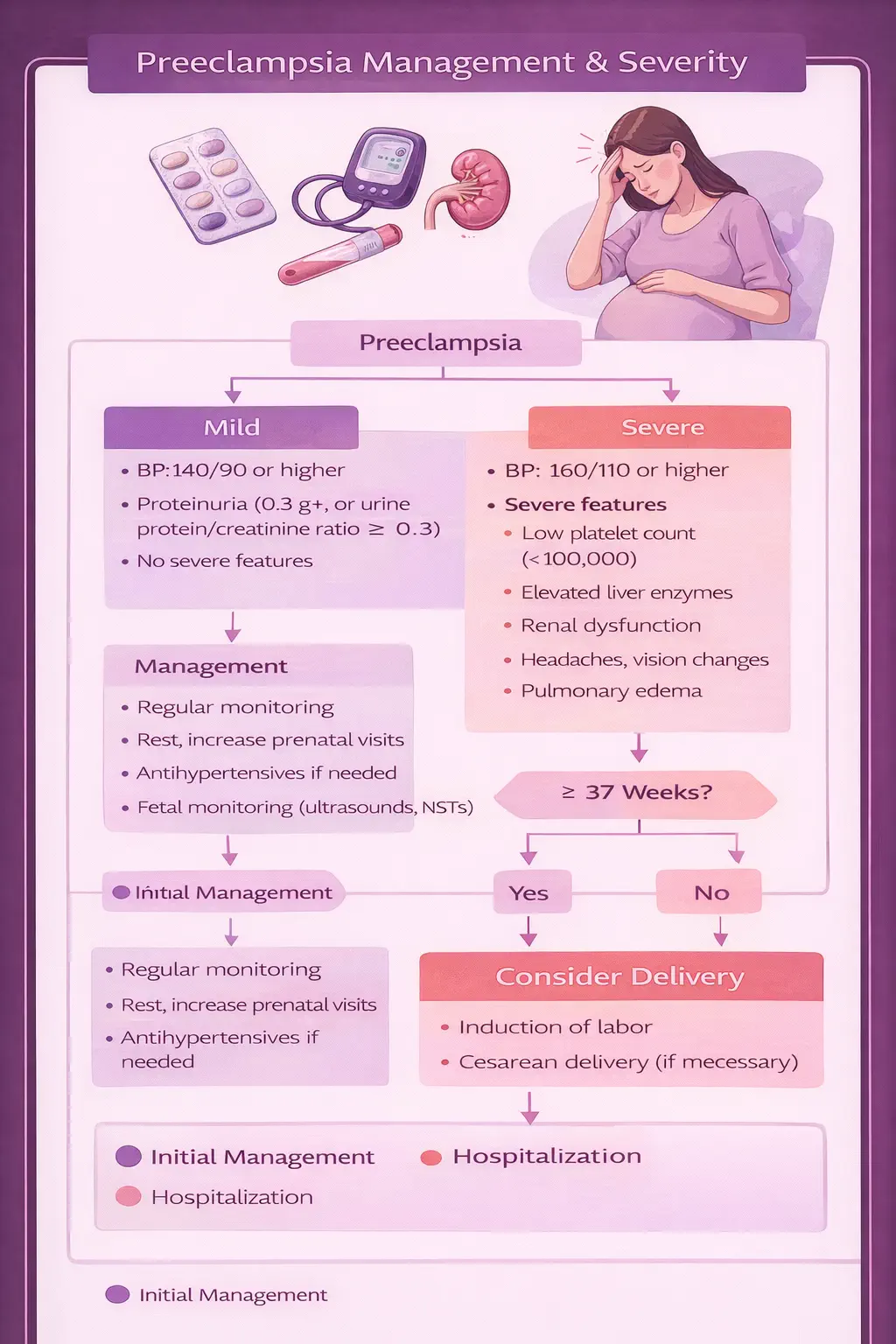
  • Blood pressure ≥140/90 mmHg but <160/110 mmHg
  • Proteinuria may be present but laboratory values remain stable
  • Platelet count ≥100,000/μL
  • Liver transaminases normal or mildly elevated but <2x normal
  • Renal function stable
  • No cerebral or visual symptoms
  • No pulmonary edema

Management: Close outpatient or inpatient monitoring with serial blood pressure checks, laboratory evaluation (CBC, comprehensive metabolic panel, LDH) at least weekly, and fetal surveillance with non-stress testing and amniotic fluid assessment. Delivery is planned at 37 weeks of gestation based on the HYPITAT trial, which demonstrated that induction at 37 weeks reduces maternal complications without increasing neonatal morbidity compared to expectant management.

Severe Features Warning

Preeclampsia can progress from non-severe to severe within hours to days. Patients diagnosed with preeclampsia without severe features must understand the warning signs that indicate disease progression. Any of the severe-feature criteria listed below should prompt immediate medical evaluation — do not wait for a scheduled appointment.

Preeclampsia With Severe Features

The presence of any one of the following defines severe features:

  • Systolic blood pressure ≥160 mmHg or diastolic ≥110 mmHg on two occasions at least four hours apart (or once if requiring immediate treatment)
  • Thrombocytopenia: Platelet count <100,000/μL
  • Hepatic dysfunction: Liver transaminases (AST, ALT) elevated to ≥2 times the upper limit of normal, or severe persistent right upper quadrant or epigastric pain unresponsive to medication
  • Renal insufficiency: Serum creatinine >1.1 mg/dL or doubling of baseline creatinine in the absence of other renal disease
  • Pulmonary edema: Shortness of breath with evidence of fluid overload
  • New-onset cerebral or visual disturbances: Severe headache unresponsive to acetaminophen, visual scotomata, blurred vision, cortical blindness, altered mental status

Management: Admission to a facility with the capacity for continuous maternal and fetal monitoring. Magnesium sulfate is administered intravenously for seizure prophylaxis. Antihypertensive therapy (IV labetalol, IV hydralazine, or oral nifedipine) is initiated to control severely elevated blood pressure. Delivery is recommended at ≥34 weeks of gestation, or upon diagnosis if the patient is already at or beyond 34 weeks. Before 34 weeks, expectant management may be attempted only in a tertiary care setting if both mother and fetus are stable.

Preeclampsia severity classification flowchart - diagnostic criteria branching into non-severe and severe management pathways with delivery timing
Severity classification and management algorithm. Based on ACOG Practice Bulletin #222, 2020.

Delivery Timing by Severity

Delivery is the only definitive treatment for preeclampsia. The central clinical question is always: when does the risk of continuing the pregnancy exceed the risk of delivery at the current gestational age? The answer depends on severity classification and fetal maturity.

Classification Delivery Timing Key Considerations
Without severe features 37 weeks HYPITAT trial evidence. Induction reduces maternal morbidity without increasing neonatal complications. Close monitoring until delivery.
With severe features, ≥34 weeks At diagnosis (do not delay) Magnesium sulfate for seizure prophylaxis. Antenatal corticosteroids if 34+0 to 36+6 weeks (late preterm). Antihypertensives as needed.
With severe features, <34 weeks 34 weeks (or sooner if unstable) Expectant management ONLY in tertiary care if mother and fetus stable. Antenatal corticosteroids (betamethasone) for fetal lung maturity. Continuous monitoring. Delivery if deterioration occurs.
HELLP syndrome, ≥34 weeks At diagnosis HELLP (hemolysis, elevated liver enzymes, low platelets) is a severe variant. Stabilize, then deliver. Magnesium sulfate.
Eclampsia Immediate stabilization, then delivery Seizure control with magnesium sulfate. Maternal stabilization. Delivery after stabilization regardless of gestational age. Fetal status reassessed after maternal stabilization.

Expectant Management Before 34 Weeks

When preeclampsia with severe features is diagnosed before 34 weeks of gestation, the decision between immediate delivery and expectant management requires careful individualized assessment. Expectant management — continuing the pregnancy under intensive surveillance to allow additional fetal maturation — is only appropriate when all of the following conditions are met:

  • The patient is in a tertiary care center with maternal-fetal medicine specialists, an NICU, and capacity for emergent cesarean delivery.
  • Maternal condition is stable: Blood pressure is controlled with antihypertensive therapy, no progression of end-organ dysfunction, no eclampsia, no HELLP, no placental abruption.
  • Fetal status is reassuring: Non-stress test is reactive, amniotic fluid is adequate, no evidence of fetal growth restriction with absent or reversed end-diastolic flow.
  • Antenatal corticosteroids (betamethasone) have been administered to accelerate fetal lung maturity. The course requires 48 hours for maximal benefit.

If at any point during expectant management the maternal or fetal condition deteriorates, delivery is indicated regardless of gestational age. The expected benefit of each additional day in utero must be weighed against the risk of catastrophic complications including placental abruption, eclampsia, stroke, and hepatic rupture.

Postpartum Preeclampsia

Preeclampsia is not exclusively an antepartum condition. Postpartum preeclampsia can develop up to six weeks after delivery, including in women who had entirely normal blood pressure during pregnancy and delivery. This is a frequently underrecognized presentation that can result in delayed diagnosis and serious maternal harm.

The pathophysiology involves the same endothelial dysfunction and vascular abnormalities as antepartum preeclampsia. The postpartum period is a time of significant hemodynamic shifts — fluid redistribution, increases in intravascular volume, and hormonal changes — that can unmask or precipitate hypertensive disease.

Clinical Presentation

Postpartum preeclampsia presents with the same signs and symptoms as antepartum disease:

  • New-onset hypertension (≥140/90 mmHg)
  • Severe headache unresponsive to over-the-counter analgesics
  • Visual disturbances (blurred vision, scotomata, photophobia)
  • Epigastric or right upper quadrant pain
  • Nausea or vomiting (particularly when accompanied by other symptoms)
  • Rapid-onset edema, especially facial and hand swelling
  • Shortness of breath

Monitoring and Follow-Up

ACOG recommends that blood pressure be assessed within 72 hours of discharge and again at 7–10 days postpartum, either in-office or through a validated home blood pressure monitoring protocol. Patients who had preeclampsia during pregnancy are at particularly high risk and should have frequent postpartum blood pressure surveillance.

Treatment follows the same principles as antepartum management: antihypertensive therapy for severe-range blood pressure and magnesium sulfate for seizure prophylaxis when severe features are present.

Long-Term Cardiovascular Implications

A history of preeclampsia is now recognized as an independent risk factor for future cardiovascular disease. Women with prior preeclampsia have approximately twice the risk of coronary heart disease, stroke, and cardiovascular death compared to women with normotensive pregnancies. The American Heart Association (AHA) includes a history of preeclampsia as a risk-enhancing factor in cardiovascular risk assessment.

This means that the conversation about preeclampsia does not end at the six-week postpartum visit. Long-term follow-up should include:

  • Annual blood pressure monitoring
  • Periodic lipid panel and glucose screening
  • Counseling on modifiable cardiovascular risk factors (weight, exercise, diet, smoking cessation)
  • Communication with the patient’s primary care provider about her preeclampsia history
Postpartum Warning

Preeclampsia can develop for the first time after delivery. New headaches, visual changes, severe swelling, or elevated blood pressure in the days or weeks after childbirth should never be dismissed as “normal postpartum recovery.” These symptoms require urgent evaluation — contact your provider immediately or go to the emergency department.

When to Call Now

Contact your provider immediately or go to the nearest emergency department if you experience any of the following during pregnancy or within six weeks after delivery:

  • Severe, persistent headache that does not respond to acetaminophen
  • Visual disturbances — blurred vision, seeing spots or flashing lights, temporary loss of vision
  • Epigastric or right upper quadrant pain — pain below the ribs on the right side or in the upper abdomen, sometimes described as “heartburn that doesn’t go away”
  • Rapid-onset swelling — sudden swelling of the face, hands, or feet, especially if asymmetric or accompanied by other symptoms
  • Shortness of breath — difficulty breathing, especially when lying flat
  • Decreased fetal movement — if you notice a significant decrease in your baby’s usual movement pattern
  • Nausea or vomiting in the second half of pregnancy, particularly when accompanied by abdominal pain or headache

These symptoms may indicate preeclampsia with severe features, HELLP syndrome, or impending eclampsia. Timely evaluation can be lifesaving. Do not wait for a scheduled appointment.

Key Takeaways
  • Preeclampsia affects 3–8% of pregnancies and is defined by new-onset hypertension after 20 weeks with proteinuria or end-organ dysfunction (ACOG PB #222).
  • Risk assessment at the first prenatal visit is essential — high-risk factors include prior preeclampsia, chronic hypertension, diabetes, renal disease, autoimmune disease, and multifetal gestation.
  • Low-dose aspirin (81 mg daily) reduces preeclampsia risk by ~24% when started before 16 weeks. One high-risk factor or two moderate-risk factors qualifies a patient (USPSTF 2021).
  • Proteinuria is no longer required for diagnosis — end-organ dysfunction (thrombocytopenia, elevated liver enzymes, renal insufficiency, pulmonary edema, cerebral symptoms) is sufficient.
  • Without severe features: deliver at 37 weeks. With severe features: deliver at ≥34 weeks. Eclampsia: immediate stabilization and delivery.
  • Postpartum preeclampsia can develop up to 6 weeks after delivery — headache, visual changes, and elevated blood pressure after delivery require urgent evaluation.
  • Prior preeclampsia is an independent cardiovascular risk factor — long-term monitoring of blood pressure, lipids, and metabolic health is recommended.

References & Clinical Sources

  1. American College of Obstetricians and Gynecologists. Practice Bulletin No. 222: Gestational Hypertension and Preeclampsia. Obstetrics & Gynecology, 135(6), e237–e260. 2020.
  2. U.S. Preventive Services Task Force. Aspirin Use to Prevent Preeclampsia and Related Morbidity and Mortality: Recommendation Statement. JAMA, 326(12), 1186–1191. 2021.
  3. Rolnik DL, Wright D, Poon LC, et al. Aspirin versus Placebo in Pregnancies at High Risk for Preterm Preeclampsia (ASPRE trial). New England Journal of Medicine, 377(7), 613–622. 2017.
  4. Koopmans CM, Bijlenga D, Groen H, et al. Induction of Labour versus Expectant Monitoring for Gestational Hypertension or Mild Pre-eclampsia after 36 Weeks’ Gestation (HYPITAT trial). The Lancet, 374(9694), 979–988. 2009.
  5. Magee LA, von Dadelszen P, et al. Diagnosis, Evaluation, and Management of the Hypertensive Disorders of Pregnancy: SOGC Clinical Practice Guideline. Journal of Obstetrics and Gynaecology Canada, 36(5), 416–441. 2014.
  6. American Heart Association. Adverse Pregnancy Outcomes and Cardiovascular Disease Risk: Unique Opportunities for Cardiovascular Disease Prevention in Women. Circulation, 143(18), e902–e916. 2021.
  7. Henderson JT, Vesco KK, Senger CA, et al. Aspirin Use to Prevent Preeclampsia and Related Morbidity and Mortality: Updated Evidence Report and Systematic Review for the USPSTF. JAMA, 326(12), 1192–1206. 2021.

Related Resources

Your Pregnancy. Monitored. Protected. Evidence-Based.

Concerned about preeclampsia risk? Planning a pregnancy with known risk factors? Dr. Broad provides structured risk assessment and evidence-based prevention for patients in Newport Beach and Orange County.

Schedule a Consultation →

Broad Medical Group — Newport Beach, California · Hoag Hospital

Medical Disclaimer: This content is for educational purposes only and does not constitute medical advice, diagnosis, or treatment. Consult Dr. Jennifer Broad or your healthcare provider for guidance specific to your situation. Current as of April 2026. If you are experiencing a medical emergency, call 911 immediately.