Understanding the condition. Weighing your options. Building a long-term plan.
Endometriosis affects roughly 1 in 10 women of reproductive age, causing chronic pain, painful periods, and infertility — yet the average diagnosis takes 7 to 10 years. This guide covers what endometriosis is, how it is staged, the full range of medical and surgical treatment options, how it affects fertility, and what long-term management looks like.
Endometriosis is a chronic condition in which endometrial-like tissue grows outside the uterus, affecting approximately 10 percent of reproductive-age women — roughly 176 million women worldwide ACOG PB #114. Common sites include the ovaries, fallopian tubes, pelvic peritoneum, bowel, and bladder. The disease causes chronic pelvic pain, severe dysmenorrhea, dyspareunia, and infertility, and is classified using the revised ASRM staging system from Stage I (minimal) to Stage IV (severe) — though staging does not correlate reliably with symptom severity ACOG PB #114; ESHRE 2022. First-line medical management includes NSAIDs and hormonal suppression (combined oral contraceptives, progestins, GnRH agonists with add-back therapy, or the GnRH antagonist elagolix). When medical therapy fails, laparoscopic excision is the gold standard for both definitive diagnosis and surgical treatment, with excision preferred over ablation Dunselman 2014; ESHRE 2022. Endometriosis is found in 25 to 50 percent of infertile women, and surgical treatment can improve natural conception rates, particularly in early-stage disease Practice Committee of ASRM. At Broad Medical Group, Dr. Jennifer Broad provides comprehensive endometriosis care from initial evaluation through long-term management for patients in Newport Beach and Orange County.
Endometriosis is a chronic, estrogen-dependent condition in which tissue that resembles the endometrium — the lining of the uterus — grows outside the uterus. Unlike normal endometrial tissue, which sheds during menstruation and exits the body, these ectopic implants have no way to exit. They respond to the same hormonal signals as the uterine lining: growing, breaking down, and bleeding with each menstrual cycle. The result is chronic inflammation, scarring, adhesion formation, and pain.
Endometriosis affects approximately 10 percent of women of reproductive age — an estimated 176 million women worldwide. Despite its prevalence, it remains underdiagnosed and poorly understood by many outside of gynecologic specialty care. The exact cause is not definitively established, though the most widely accepted theory involves retrograde menstruation (menstrual blood flowing backward through the fallopian tubes into the pelvic cavity) combined with immune system dysfunction that fails to clear the displaced tissue.
The most common locations for endometriotic implants include:
The consequences of untreated or under-treated endometriosis are significant: chronic pelvic pain that can be debilitating, infertility (present in 30–50 percent of affected women), and dense adhesions that can distort pelvic anatomy and impair organ function. Endometriosis is not just “bad periods” — it is a systemic inflammatory condition that affects quality of life, work productivity, relationships, and mental health.
Endometriosis is managed within the broader context of minimally invasive gynecologic surgery when surgical intervention is indicated. At Broad Medical Group, Dr. Broad takes a comprehensive approach to endometriosis that addresses both the pain and the underlying disease process.
The symptoms of endometriosis are variable and often overlap with other conditions, which contributes to the significant diagnostic delay that most patients experience. Some women have severe symptoms with minimal visible disease; others have extensive disease discovered incidentally during surgery for another reason. The hallmark symptoms include:
The average time from symptom onset to endometriosis diagnosis is 7 to 10 years. This delay occurs because painful periods are frequently normalized (“that’s just how periods are”), because there is no reliable non-invasive diagnostic test, and because symptoms overlap with irritable bowel syndrome, interstitial cystitis, and other conditions. Severe menstrual pain that interferes with daily life is not normal — it warrants evaluation, not dismissal.
Keep a symptom diary. Track your pain (location, severity on a 1–10 scale, timing relative to your cycle), bowel and bladder symptoms, the impact on daily activities, and any relationship to intercourse. A detailed symptom diary is one of the most valuable tools you can bring to your appointment — it helps Dr. Broad identify patterns, assess severity, and make treatment decisions more efficiently than relying on memory alone.
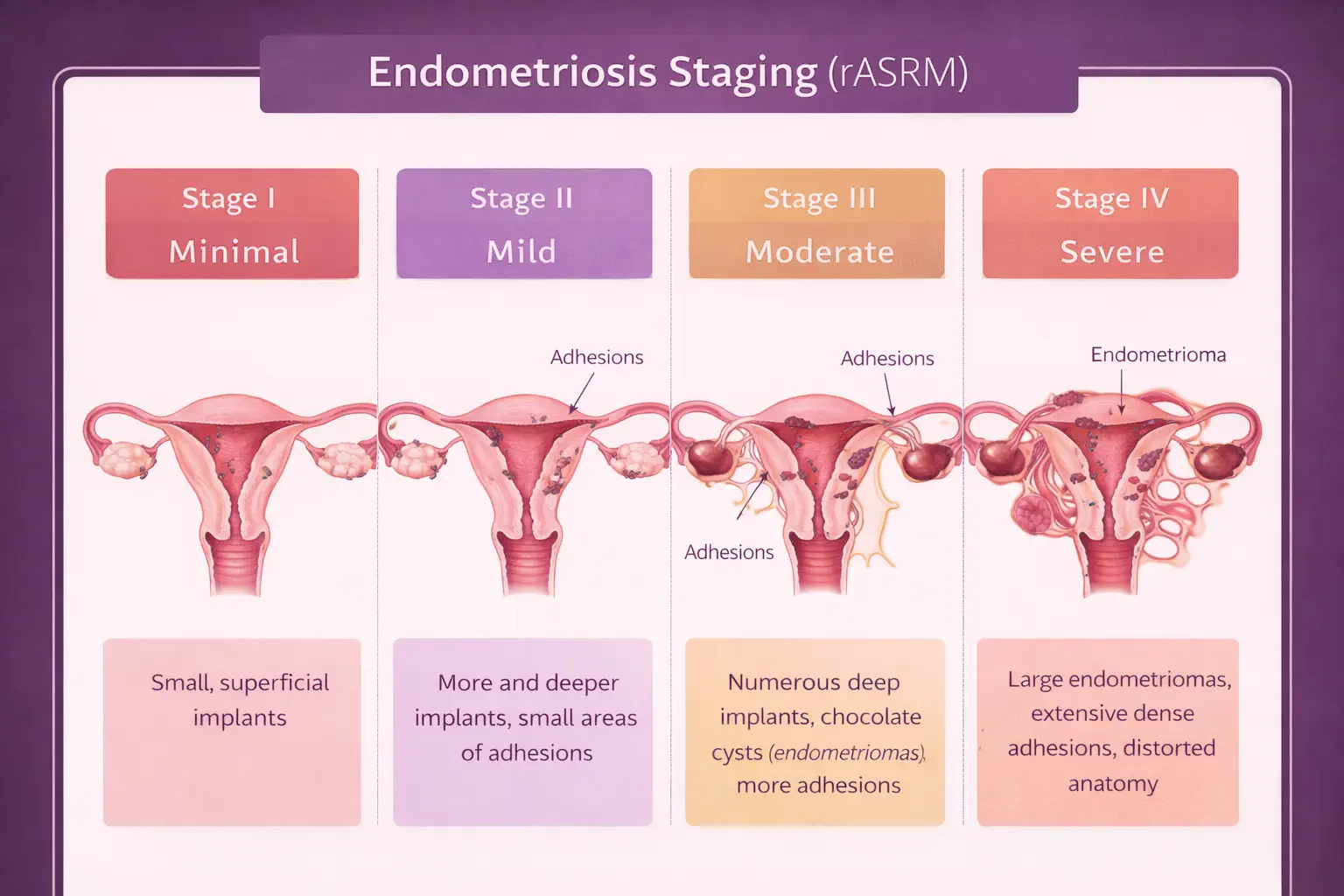
Endometriosis is classified using the revised American Society for Reproductive Medicine (rASRM) staging system, which assigns a point score based on the location, extent, and depth of endometriotic implants and adhesions. The staging is determined surgically — it cannot be reliably determined by imaging, physical examination, or symptoms alone. Laparoscopy with visual inspection and ideally histologic confirmation remains the gold standard for definitive diagnosis.
| Stage | Classification | Description |
|---|---|---|
| Stage I | Minimal | Isolated superficial implants; few small lesions on the peritoneum; no significant adhesions |
| Stage II | Mild | More implants, deeper than Stage I; some involvement of the cul-de-sac peritoneum; minimal adhesions |
| Stage III | Moderate | Multiple deep implants; small endometriomas on one or both ovaries; filmy adhesions present |
| Stage IV | Severe | Large endometriomas; extensive deep infiltrating disease; dense adhesions distorting pelvic anatomy; possible bowel or bladder involvement |
Staging does NOT correlate well with symptom severity. A woman with Stage I (minimal) endometriosis can experience debilitating, life-altering pain, while a woman with Stage IV (severe) disease may have relatively mild symptoms or present only with infertility. This is one of the most frustrating aspects of endometriosis — and one of the most important for patients to understand. Your stage describes the anatomic extent of disease. It does not define your pain experience, and it should never be used to dismiss your symptoms.
The rASRM system, while widely used, has known limitations. It does not account well for deeply infiltrating endometriosis (DIE), does not predict pain or fertility outcomes reliably, and has significant inter-observer variability. Newer classification systems — including the ENZIAN classification for deep endometriosis — are increasingly used alongside rASRM to provide a more complete picture of disease extent. Despite these limitations, the rASRM system remains the most commonly referenced staging system in clinical practice and research.
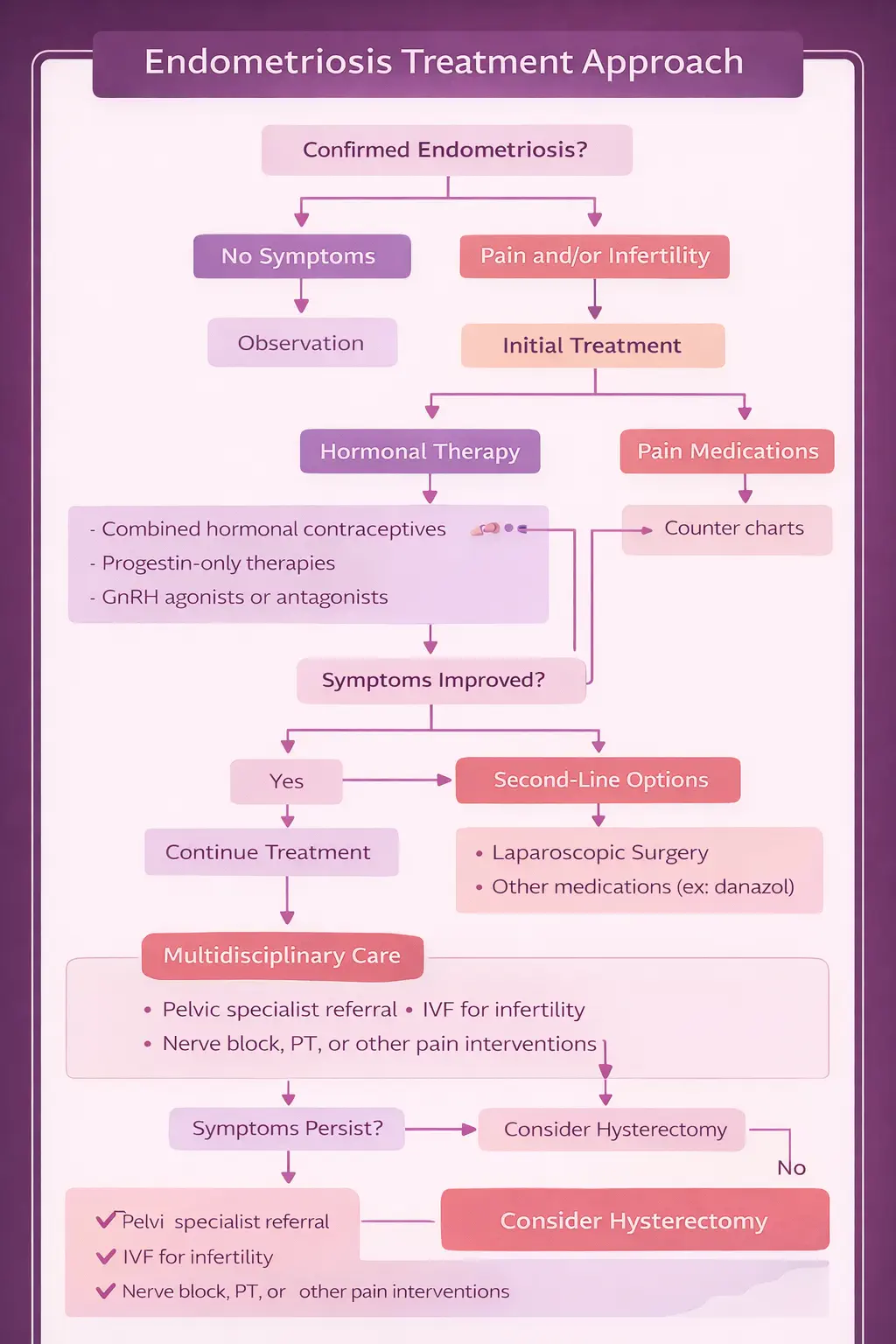
Medical management is the first-line approach for endometriosis-related pain in most patients. The goals are to suppress the hormonal stimulation that drives endometriotic tissue growth, reduce inflammation, and manage pain. It is important to understand upfront: medical management suppresses endometriosis but does not cure it. Symptoms typically recur when treatment is discontinued, because the underlying implants remain in place.
Nonsteroidal anti-inflammatory drugs (NSAIDs) such as ibuprofen and naproxen are the foundation of symptomatic pain relief. They work by inhibiting prostaglandin synthesis, which drives both inflammation and uterine cramping. NSAIDs are most effective when taken before the onset of pain (i.e., starting 1–2 days before expected menstruation) rather than waiting for pain to become established. They are typically used alongside hormonal suppression, not as standalone therapy for confirmed endometriosis.
The principle behind hormonal therapy for endometriosis is straightforward: endometriotic tissue is estrogen-dependent. Reducing estrogen stimulation reduces the activity and growth of implants. Several hormonal approaches are available, and the choice depends on the patient’s symptoms, fertility plans, side effect tolerance, and response to prior treatment.
Combined oral contraceptives (COCs) are often the first hormonal agent tried, particularly in younger patients or those who also need contraception. Continuous use (skipping the placebo week to avoid withdrawal bleeding) is preferred over cyclic use for endometriosis management, as it provides more consistent suppression and eliminates the menstrual flare that many patients experience.
Progestins provide effective suppression for many patients. Options include norethindrone acetate (oral, 5 mg daily), dienogest (2 mg daily — specifically studied and approved for endometriosis in many countries), the levonorgestrel intrauterine device (Mirena), and medroxyprogesterone acetate (Depo-Provera). Progestins work by decidualizing and atrophying endometriotic tissue, reducing inflammation, and often reducing or eliminating menstruation.
GnRH agonists such as leuprolide (Lupron) create a temporary menopausal state by suppressing the hypothalamic-pituitary-ovarian axis after an initial “flare” phase. They are highly effective for pain control but cause significant menopausal side effects (hot flashes, vaginal dryness, bone density loss). For this reason, GnRH agonists are used with add-back therapy — low-dose norethindrone with or without conjugated estrogen — to mitigate side effects while maintaining therapeutic benefit. Use is generally limited to 6 to 12 months due to the risk of bone density reduction.
GnRH antagonists represent a newer class. Elagolix (Orilissa) is FDA-approved specifically for the management of endometriosis pain. Unlike GnRH agonists, elagolix is an oral medication that provides dose-dependent estrogen suppression without the initial flare phase. At lower doses (150 mg once daily), it produces partial estrogen suppression and can be used for up to 24 months; at higher doses (200 mg twice daily, with add-back), the treatment duration is limited to 6 months. Elagolix offers a more nuanced approach to estrogen management than the all-or-nothing suppression of GnRH agonists.
ACOG Practice Bulletin #114 recommends empiric treatment with hormonal therapy for women with clinically suspected endometriosis without requiring surgical confirmation first. If a patient has characteristic symptoms and responds to hormonal suppression, this supports the clinical diagnosis and surgery can be deferred. Surgery is pursued when medical management fails, when histologic diagnosis is needed, or when fertility optimization requires it.

Medical therapy is effective for symptom control in many patients, but it has important limitations that should be understood:
Surgery plays a dual role in endometriosis: it is both the gold standard for definitive diagnosis (via visual inspection and histologic confirmation) and the primary treatment for disease that has failed medical management. Laparoscopy is the preferred surgical approach, offering the advantages of minimally invasive technique including shorter recovery, reduced adhesion formation, and excellent visualization of the pelvic anatomy. For details on the specific surgical techniques, instrumentation, and the laparoscopic approach used at Broad Medical Group, see our minimally invasive gynecologic surgery overview.
Two primary techniques exist for treating endometriotic implants at the time of surgery:
The evidence supports excision as superior to ablation for both pain relief and recurrence reduction, and major guidelines including ESHRE recommend excision as the preferred surgical technique when feasible.
Surgery is not the first step for most patients with suspected endometriosis. However, it is indicated in several important scenarios:
Hysterectomy with bilateral salpingo-oophorectomy (removal of the uterus, fallopian tubes, and both ovaries) is considered the most definitive surgical treatment for endometriosis. By removing the ovaries, the estrogen source that drives endometriotic tissue is eliminated. However, several important caveats apply:
Endometriosis is found in 25 to 50 percent of women who are evaluated for infertility, making it one of the most common identifiable causes of difficulty conceiving. The relationship between endometriosis and infertility is complex, operating through several mechanisms:
For women with Stage I and Stage II endometriosis and infertility, surgical excision or ablation of implants has been shown to improve natural conception rates. The landmark Canadian trial by Marcoux et al. demonstrated a significant improvement in fecundity following laparoscopic treatment of minimal and mild endometriosis compared to diagnostic laparoscopy alone. For early-stage disease, surgery is a reasonable first step before proceeding to assisted reproductive technologies.
For Stage III and Stage IV endometriosis with infertility, the benefit of surgery on natural conception is less clearly established, and in vitro fertilization (IVF) is often recommended after surgical optimization. Surgery in these cases focuses on restoring anatomy, removing endometriomas, and creating the best possible environment for IVF success.
When ovarian endometriomas are present, the surgical approach matters for fertility preservation:
The decision between these approaches requires a careful balance between recurrence risk and ovarian reserve preservation. In women planning IVF, the decision to operate on endometriomas must weigh the potential benefit of cyst removal against the risk of further compromising an already-impacted ovarian reserve. For bilateral endometriomas, particular caution is warranted. These decisions are individualized based on age, AMH levels, symptoms, cyst size, and reproductive plans.
Endometriosis is a chronic condition. Unlike a discrete problem that is fixed with a single surgery or course of medication, endometriosis requires ongoing management, monitoring, and adaptation of treatment over years and even decades. Understanding this reality is essential for setting appropriate expectations and building a sustainable treatment plan.
Even after thorough surgical excision, endometriosis recurrence rates are 20 to 40 percent within five years. This does not mean surgery has failed — it means the condition has an inherent tendency to recur as long as the hormonal environment that drives it persists. Factors that influence recurrence include the completeness of initial excision, disease severity, patient age, and whether postoperative hormonal suppression is used.
To reduce the risk of recurrence after surgery, postoperative hormonal suppression is recommended for women who are not trying to conceive. Options include continuous combined oral contraceptives, progestins (oral or the levonorgestrel IUD), or other hormonal agents used for primary medical management. The levonorgestrel IUD (Mirena) has particularly strong evidence for reducing endometrioma recurrence and dysmenorrhea after surgical treatment. The duration of postoperative hormonal therapy is individualized — for many women, it continues until a desired pregnancy or menopause.
The most effective long-term management of endometriosis combines multiple strategies:
At Broad Medical Group, Dr. Broad approaches endometriosis as a long-term partnership with each patient — not a single consultation that ends with a prescription. Treatment plans evolve as symptoms change, as reproductive goals shift, and as new evidence and treatment options emerge.
Contact Dr. Broad’s office or go to Hoag Hospital emergency department if you experience any of the following:
If you are experiencing a medical emergency, call 911.
Living with endometriosis or suspect you may have it? Dr. Broad provides comprehensive endometriosis care — from initial evaluation and diagnosis through medical management, surgical treatment, and long-term follow-up — for patients in Newport Beach and Orange County.
Schedule a Consultation →